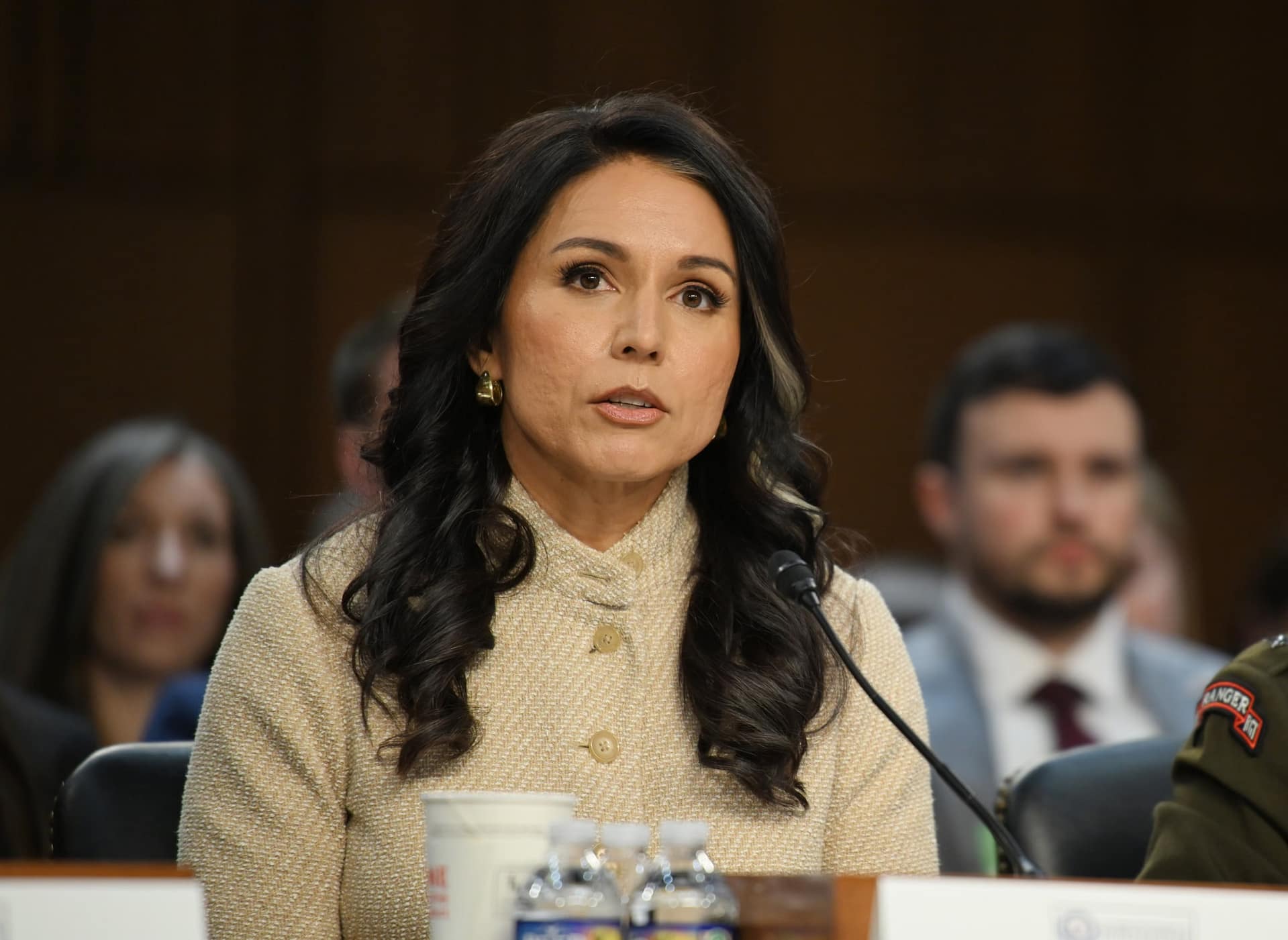
“Iran’s military capabilities have been largely destroyed.”
That’s the bold claim from Tulsi Gabbard—but the full story is far more complicated.
From battlefield losses to unanswered calls for help, the reality behind the US-Iran conflict is triggering serious questions about what “success” really means.
Table of Contents
Toggle⚡ Fast Facts (30-Second Read)
- US intelligence says Iran’s military projection is “largely destroyed”
- 13 US service members killed; ~200 wounded in retaliation
- Iran’s nuclear program reportedly “obliterated”
- No clear proof Iran posed an imminent nuclear threat before strikes
- Global supply chains and oil routes disrupted
🧠 Quick Gist
- Donald Trump ordered strikes citing nuclear threat
- Intelligence community now confirms Iran’s capabilities degraded
- But Iran’s regime remains intact—and could rebuild
- Senators question missing election interference threats in report
- Debate intensifies: Was the war justified?
🚨 What Happened — And Why It’s Explosive
During a Senate intelligence hearing, Tulsi Gabbard declared US strikes on Iran a “strategic success.”
She stated Iran’s conventional military capabilities were:
“Largely destroyed” and its position “significantly degraded.”
But here’s the twist 👇
- Iran has already retaliated
- American casualties are mounting
- Global economic ripple effects are worsening
And despite all that… the Iranian regime is still standing.
📊 Conflict Snapshot
| Key Metric | Value |
|---|---|
| US casualties | 13 dead, ~200 injured |
| Economic impact | Billions in taxpayer cost |
| Oil disruption | Strait of Hormuz instability |
| Iran military status | “Largely destroyed” |
| Regime status | Still intact |
⚠️ Why This “Success” Narrative Is Under Fire
The biggest contradiction?
While Donald Trump justified the war as stopping an imminent nuclear threat, Gabbard refused to confirm that claim.
Instead, she said:
Determining “imminent threat” is the president’s responsibility—not intelligence agencies.
That gap is raising serious concerns in Washington.
Must Read: Trump Declares Victory — Reality Pushes Back
🔍 Key Insight Box
- Intelligence confirms nuclear program was “obliterated”
- But avoids confirming urgency before strikes
👉 This leaves a critical unanswered question:
Was the war based on intelligence—or interpretation?
🌍 Strategic Fallout You Can’t Ignore
This isn’t just about Iran.
The broader intelligence report warns:
- Missile threats to the US could rise from 3,000 → 16,000 by 2035
- Countries like:
- Russia
- China
- North Korea
- Pakistan
are advancing missile systems
Meanwhile:
- Islamic State is rebuilding in Syria
- North Korean hackers stole $2 billion in crypto
👉 Translation: The global threat landscape is getting worse—not better.
🏛️ Senators Push Back — And It Gets Political
Mark Warner flagged something unusual:
👉 The report omitted election interference threats for the first time since 2017
His warning:
“This doesn’t mean the threat disappeared… it means it’s not being reported.”
Things escalated further when questions turned to an FBI raid in Fulton County.
Gabbard confirmed she was present—but distanced herself from decision-making.
⚖️ Contrarian View — Was This Actually a Win?
Supporters argue:
- Iran’s military power has been crippled
- Nuclear capabilities eliminated
Critics counter:
- The regime survived
- Retaliation killed US troops
- Economic damage is ongoing
- No confirmed imminent threat
👉 So the real debate is shifting:
Tactical victory vs strategic miscalculation
🔮 What Happens Next Could Be Even Bigger
Watch these developments closely:
- Will Iran rebuild its military over years?
- Will tensions escalate into a longer conflict?
- Can global oil routes stabilize?
- Will intelligence credibility face deeper scrutiny?
And perhaps most importantly:
👉 Will the definition of “success” in modern warfare be redefined?
❓ FAQs
1. Did US strikes destroy Iran’s nuclear program?
Yes, according to intelligence presented by Tulsi Gabbard, the nuclear program was “obliterated.”
2. Was Iran an imminent nuclear threat before the strikes?
That remains unclear. Intelligence officials did not confirm this, leaving the decision attributed to Donald Trump.
3. What are the global consequences of the US-Iran conflict?
Rising oil disruption, military escalation risks, and increasing missile threats globally.
📌 Editorial Disclaimer
This article is a rewritten analytical feature based strictly on the provided source material. All facts, statements, and data points originate from the original report. No events, outcomes, or claims have been added or altered.