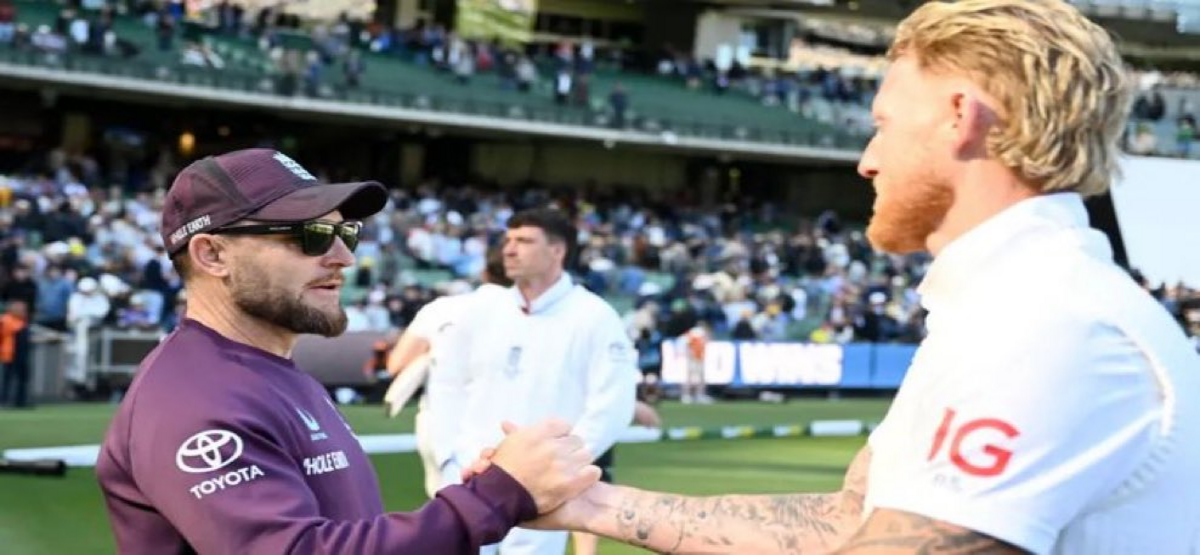
England cricket fans were left surprised this weekend: Brendon McCullum will remain as England’s head coach despite public friction with Test captain Ben Stokes. The duo reportedly resolved their differences after a tense Ashes campaign in Australia.
The development signals stability for England’s coaching setup ahead of the 2027 ODI World Cup, but questions remain over team dynamics and leadership harmony.
⚡ Fast Facts
- McCullum will continue as England head coach until after the 2027 ODI World Cup.
- Differences with Ben Stokes were resolved post-Ashes in Australia.
- ECB opted not to buy out McCullum’s contract, avoiding a large payout.
- Performance director Ed Barney now has greater powers over coaching and selection.
- Stokes, now 36, has been hampered by injuries in recent Test series.
Quick Gist
- England coach McCullum and captain Stokes clashed over attacking cricket philosophy.
- ECB facilitated reconciliation to maintain coaching panel stability.
- McCullum accepted ECB’s structural changes and leadership framework.
- The duo will lead England into the 2027 Ashes and ODI World Cup campaigns.
What Happened
After the Ashes series in Australia, tensions between Brendon McCullum and Ben Stokes became public. Stokes criticized McCullum’s approach, noting that rival teams had found answers to England’s style. McCullum, in turn, expressed frustration that Stokes sometimes deviated from their planned attacking strategies.
The ECB intervened, facilitating discussions that led to mutual understanding. Rather than paying McCullum a massive contract buyout, which would have destabilized the coaching panel, the board allowed him to continue under revised terms.
Contract Timeline:
| Coach | Contract Ends | Major Event Coverage |
|---|---|---|
| Brendon McCullum | 2027 ODI World Cup | South Africa, Namibia, Zimbabwe |
Why It Matters
This reconciliation is crucial for England ahead of major tournaments:
- Continuity in coaching ensures preparation for the 2027 Ashes at home.
- Avoids disruption in white-ball formats, maintaining McCullum’s attacking philosophy.
- Signals ECB’s preference for internal conflict resolution over high-cost exits.
Must Read: Dwayne Bravo’s “Two Chicks” Slip Sparks KKR Controversy — Here’s Why It Matters
Strategic & Industry Impact
From a cricket management perspective:
- Performance director Ed Barney has increased authority over coaching and player conditioning.
- This restructuring mirrors modern sports management trends, where directors of performance oversee holistic team development.
- Financially, the ECB avoided a high-cost contract termination, maintaining budget flexibility for other initiatives.
What Experts Are Saying
Cricket analysts highlight a few angles:
- Consistency matters: Retaining McCullum avoids upheaval before the World Cup.
- Stokes’ fitness concerns are a factor; managing a 36-year-old captain is critical for Ashes strategy.
- Team morale could improve** if the reconciliation sticks, helping England play bold cricket without internal friction.
Contrarian View
Not all are convinced:
- Critics argue unresolved tensions may resurface under pressure, affecting in-game decisions.
- Some former players claim that the public airing of disputes erodes confidence among younger squad members.
What Happens Next
England will now focus on:
- Monitoring Stokes’ fitness for Ashes 2027.
- Implementing McCullum’s attacking strategies with clearer alignment.
- Selection and conditioning overseen by Ed Barney to optimize team readiness.
Fans should watch how coaching philosophy meets player execution in upcoming ODI and Test series.
FAQs
Q1: Why did Brendon McCullum stay as England coach?
He reconciled differences with Ben Stokes and accepted ECB’s structural changes, avoiding a costly buyout.
Q2: How does this impact England’s Ashes 2027 campaign?
The resolution ensures coaching continuity, allowing McCullum to implement attacking strategies while managing Stokes’ fitness concerns.
Q3: What changes did ECB make in coaching oversight?
Performance director Ed Barney gained more authority over coaching staff selection and player conditioning.
Editorial Disclaimer
This article is based on verified reports from Telegraph Sport and official ECB sources. All facts are factual and no speculative outcomes were created.