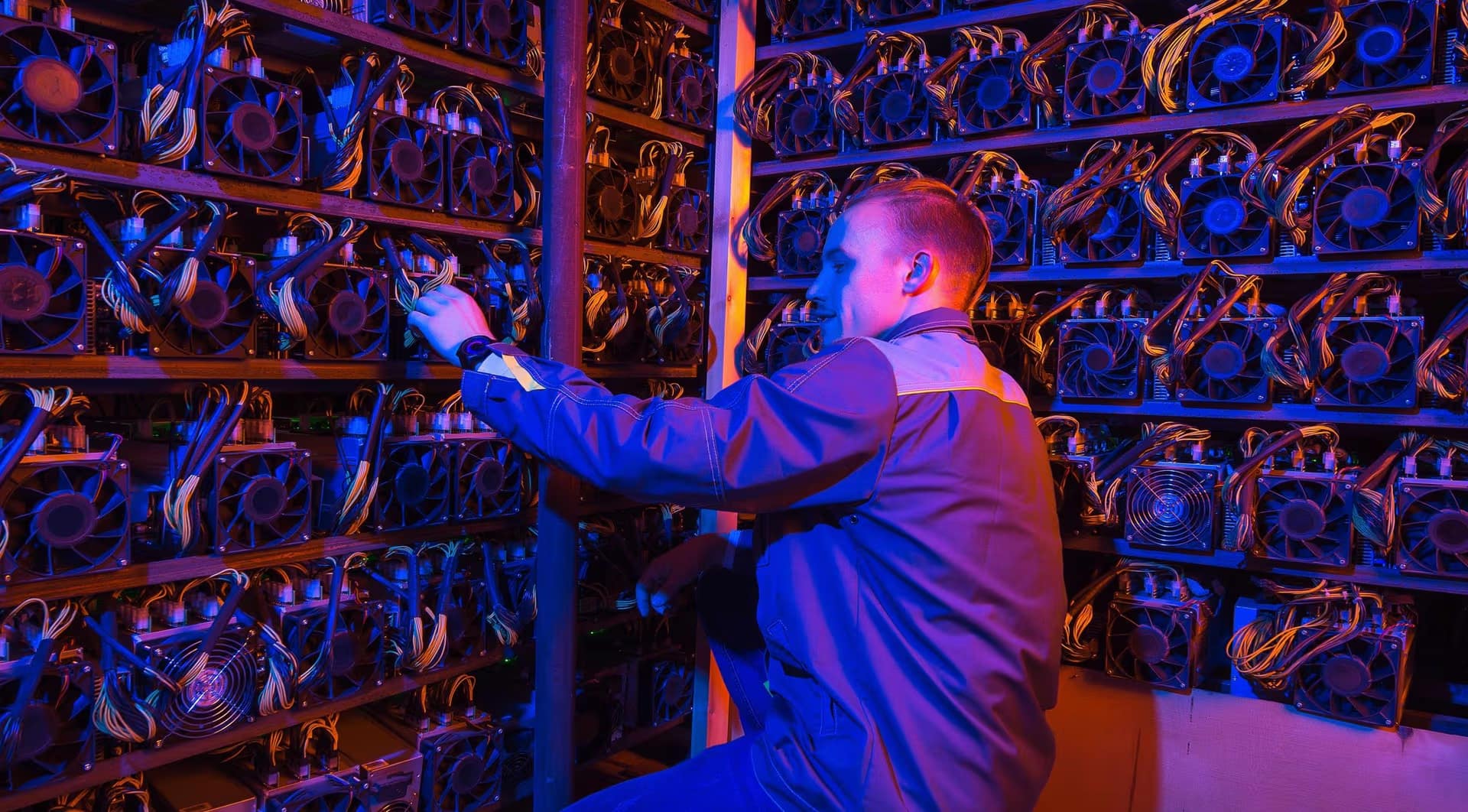
A shocking break in a six-year trend just hit Bitcoin.
For the first time since 2020, Bitcoin’s hashrate dropped in the first quarter — and it’s not just a blip. It signals a deeper shift that could reshape the entire crypto mining landscape.
And here’s the twist: miners aren’t quitting… they’re pivoting.
Table of Contents
Toggle⚡ Fast Facts
- Bitcoin hashrate is down ~4% in Q1 2026
- First first-quarter decline in 6 years
- Mining costs (~$90K per BTC) now exceed price (~$67K)
- Miners are shifting capital to AI infrastructure
- Forecast still points to 1.8 ZH/s by end of 2026
🧠 30-Second Gist
- Bitcoin mining growth just broke a long-standing trend
- Profitability is collapsing due to high costs vs low BTC price
- Big miners are moving into AI and high-performance computing
- This could reduce U.S. dominance in mining
- Ironically, decentralization may improve
🚨 What Just Happened — And Why It’s Raising Eyebrows
After five straight years of explosive growth, Bitcoin’s total computing power — its hashrate — has slipped to around 1 zettahash per second (ZH/s).
That’s a roughly 4% drop in 2026 so far.
To put this into perspective:
| Year | Hashrate Trend |
|---|---|
| 2020–2025 | Consistent Q1 growth |
| 2022 | Nearly doubled |
| 2026 | First Q1 decline |
This isn’t just unusual — it breaks a pattern that many believed was untouchable.
So what changed?
💸 The Real Problem: Mining Is Losing Money
Here’s the uncomfortable truth:
Producing 1 Bitcoin now costs around $90,000
But the market price is closer to $67,000
That’s a brutal mismatch.
Miners are essentially operating at a loss — and they’re responding fast.
⚙️ What They’re Doing Instead
- Redirecting capital into AI data centers
- Investing in high-performance computing (HPC)
- Funding the shift through debt and BTC sales
This isn’t a slowdown. It’s a strategic pivot.
🤖 The AI Gold Rush Is Pulling Miners Away
Bitcoin mining companies aren’t disappearing — they’re evolving.
AI infrastructure offers:
- More predictable returns
- Higher margins
- Less dependence on volatile crypto prices
So instead of reinvesting in mining rigs, companies are building AI capacity.
👉 That means less hashpower flowing into Bitcoin — at least for now.
⚖️ Why This Could Actually Be GOOD for Bitcoin
At first glance, falling hashrate sounds dangerous.
Less computing power = weaker network security, right?
Not necessarily.
🧩 Key Insight
Large publicly listed U.S. miners currently control over 40% of global hashrate.
If they scale back:
- Smaller players may step in
- Geographic distribution could improve
- Network decentralization may increase
In other words: less dominance, more balance
📊 Key Metrics Snapshot
| Metric | Value |
|---|---|
| Current Hashrate | ~1 ZH/s |
| YTD Change | -4% |
| Mining Cost per BTC | ~$90,000 |
| BTC Market Price | ~$67,000 |
| U.S. Miner Share | 40%+ |
🧠 What Analysts Are Saying (And Not Saying)
Despite the dip, projections remain surprisingly optimistic.
CoinShares forecasts:
- Hashrate could reach 1.8 ZH/s by end of 2026
- BUT only if Bitcoin rebounds toward $100,000
So the future hinges on one thing:
👉 Price recovery
No recovery = more miners exit
Recovery = growth resumes
Must Read: Trump Bitcoin Bet Explodes — But Stock Crashes
🔥 Contrarian View: Is This the Start of a Bigger Problem?
Not everyone sees this as healthy.
Some argue:
- AI pivot could permanently reduce mining investment
- Smaller miners may not fully replace exiting giants
- Security concerns could grow if decline accelerates
And here’s the uncomfortable question:
👉 What if Bitcoin’s growth era is slowing down?
🔮 What Happens Next — Watch These Signals
Keep an eye on these triggers:
- Bitcoin price movement (toward or away from $100K)
- Continued AI infrastructure investments
- Exit of smaller mining firms
- Changes in global hashrate distribution
Because the next phase of Bitcoin may not be about growth…
…it may be about survival and adaptation.
❓ FAQs
Why did Bitcoin hashrate drop in 2026?
Because mining became unprofitable, with production costs exceeding Bitcoin’s market price, pushing miners to reduce activity or pivot.
Are miners really switching to AI instead of Bitcoin?
Yes. Many are reallocating capital to AI and high-performance computing due to better returns and stability.
Is a falling hashrate bad for Bitcoin?
Not necessarily. While it may raise security concerns, it could also improve decentralization by reducing dominance from large U.S. miners.
⚠️ Editorial Disclaimer
This article is based entirely on verified information from the original source. It includes analytical interpretation for reader clarity and engagement. No facts, events, or outcomes have been altered or fabricated.