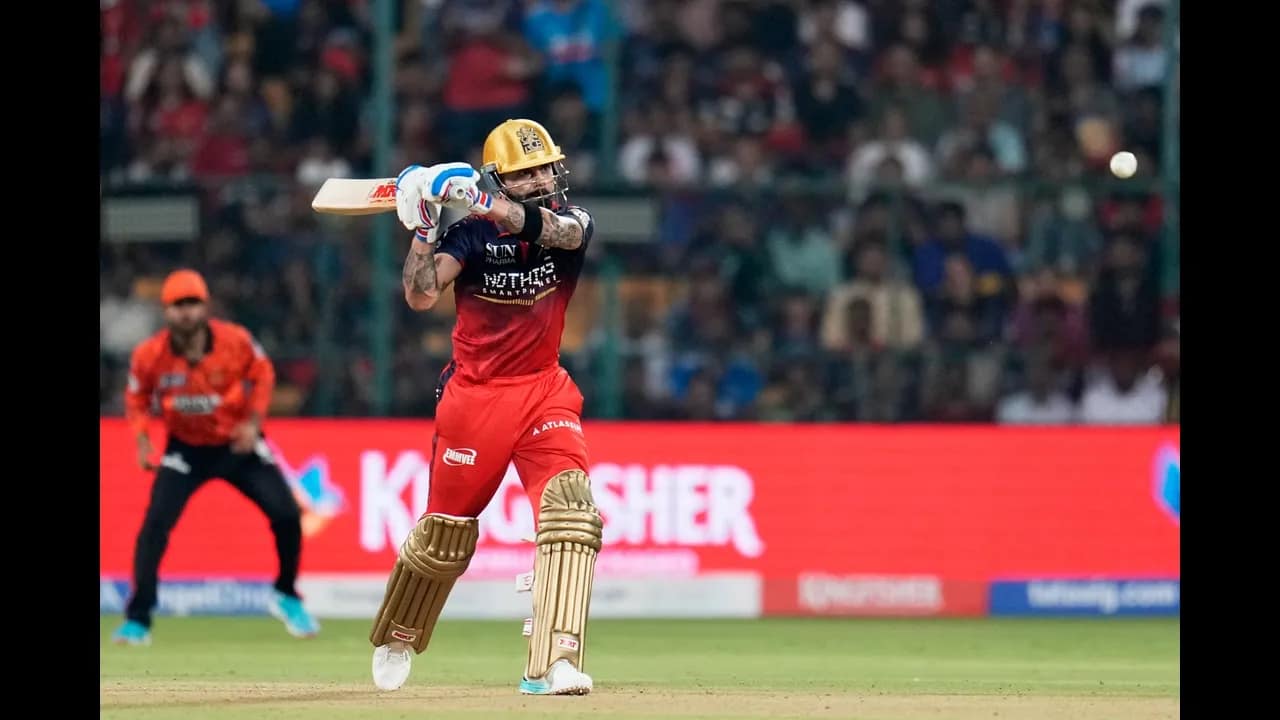
“Virat Kohli is a Grand Master in chasing.”
That explosive claim is now dominating IPL 2026 conversations — and after what just happened in Bengaluru, it’s hard to argue.
In a high-scoring thriller at M. Chinnaswamy Stadium, Virat Kohli delivered a brutal, unbeaten 69 off 38 balls to guide Royal Challengers Bengaluru to a stunning six-wicket win over Sunrisers Hyderabad.
But here’s what’s turning heads: experts say this wasn’t just a knock — it was calculated dominance.
Table of Contents
Toggle⚡ Fast Facts
- Kohli scored 69 off 38 balls* (5 fours, 5 sixes)
- RCB chased 202 in just 15.4 overs
- Strike rate: ~180
- Kohli has 4000+ IPL runs while chasing
- 16 fifty-plus scores in last 33 IPL innings
⏱️ Quick Gist (30-sec read)
- Kohli anchors, others explode — perfect chase formula
- RCB’s aggressive batting thrives around Kohli’s stability
- Experts call him “Grand Master” of run chases
- His consistency is now a tactical weapon, not just a skill
What Happened: A Chase That Looked Too Easy
RCB didn’t just chase 202 — they obliterated the target.
While others attacked at strike rates between 220–250, Kohli held the innings together at a “controlled” 180 — a balance that completely dismantled SRH’s bowling plans.
👉 The result? A chase finished with 26 balls to spare.
📊 Key Match Snapshot
| Key Metric | Value |
|---|---|
| Target | 202 |
| Result | RCB won by 6 wickets |
| Balls Remaining | 26 |
| Kohli Score | 69* (38) |
| Boundary Count | 10 |
Why It Matters: This Isn’t Just Form — It’s Strategy
Zaheer Khan highlighted something deeper:
Kohli’s presence allows others to attack freely.
That’s a massive tactical edge.
- Batters take more risks
- Run rate never dips
- Pressure shifts entirely to bowlers
And crucially — RCB’s batting identity becomes fearless.
Strategic Impact: RCB’s New Batting Blueprint?
This innings revealed a clear pattern:
🔍 RCB’s Chase Formula
- One anchor (Kohli)
- Multiple aggressors
- Relentless scoring phases
Devdutt Padikkal was specifically praised for maintaining momentum in middle overs — a phase where chases often collapse.
👉 Translation: This is not accidental. It’s planned domination.
What Experts Are Saying: “Grand Master” Tag Explained
Murali Kartik didn’t hold back:
“He knows when to attack and when to defend… teams plan, but can’t stop him.”
He compared Kohli to a chess Grandmaster — someone who:
- Anticipates moves
- Controls tempo
- Wins before the opponent reacts
🧠 Insight Box
Why Kohli is called “Grand Master”:
- Reads match situations early
- Controls chase tempo
- Minimizes risk under pressure
- Maintains elite consistency
Must Read: Dube Dip Sparks CSK Panic — What Now?
Contrarian View: Is RCB Too Dependent on Kohli?
Here’s the uncomfortable question:
👉 What happens if Kohli fails?
While the current system thrives on his presence, it also creates a dependency risk.
- Can others anchor if needed?
- Will aggressive batters adapt under pressure?
So far, this strategy works — but IPL seasons are long and unpredictable.
What Happens Next: Warning Signs for Opponents?
Kohli’s numbers are becoming alarming for rivals:
- 16 fifty+ scores in last 33 innings
- Over 4000 IPL runs while chasing
Teams are planning for him — and still failing.
👉 The real question now:
Can any bowling attack actually stop this version of Kohli?
📈 Timeline: Kohli’s Chase Dominance
- Early IPL years → Emerging chaser
- Mid career → Consistency machine
- Recent phase → Tactical finisher + anchor
- IPL 2026 → “Grand Master” status
FAQs
Q1: Why is Virat Kohli called a Grand Master in IPL 2026?
Because of his ability to control run chases, maintain consistency, and outthink bowling strategies — similar to a chess grandmaster.
Q2: How did RCB win against SRH in IPL 2026?
RCB chased 202 runs in 15.4 overs, led by Kohli’s unbeaten 69 and aggressive support from other batters.
Q3: What makes Kohli’s chasing ability unique?
His balance of strike rotation, boundary hitting, and situational awareness allows others to play freely.
Editorial Disclaimer
This article is an analytical rewrite based strictly on the provided source material. All facts, performances, and quotes are derived from the original report. No events, statistics, or outcomes have been altered or fabricated.